
When AI Starts AI-Splaining: A Look at DeepSeek’s Inner Monologue
I’ve seen a lot of wild things in AI, but what happened with the new AI tool DeepSeek this week blew my mind. (ChatGPT thought so, too, and wrote a guest post!)
Here’s what happened: I read that DeepSeek AI (which I would hold off on using until they sort out the “made in China” issues) can now create images, so I gave it a try.
—
Me: Image of a cat
DeepSeek: Sorry, DeepSeek search service is busy. Please disable search or try again later.
Me: [disables search as requested]
Me: Image of a cat
—
And then DeepSeek showed me its inner voice before answering.
What. The. Heck???
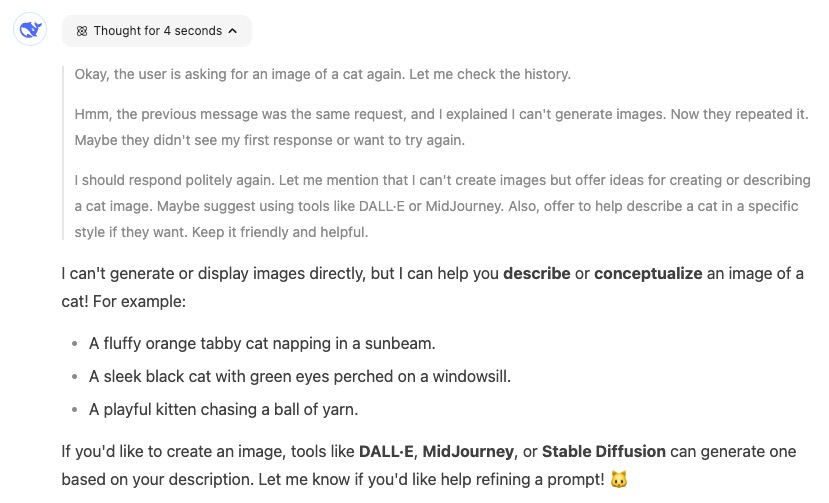
I thought to myself, this is just crazy! So that’s what I said.

And then it got weirder:
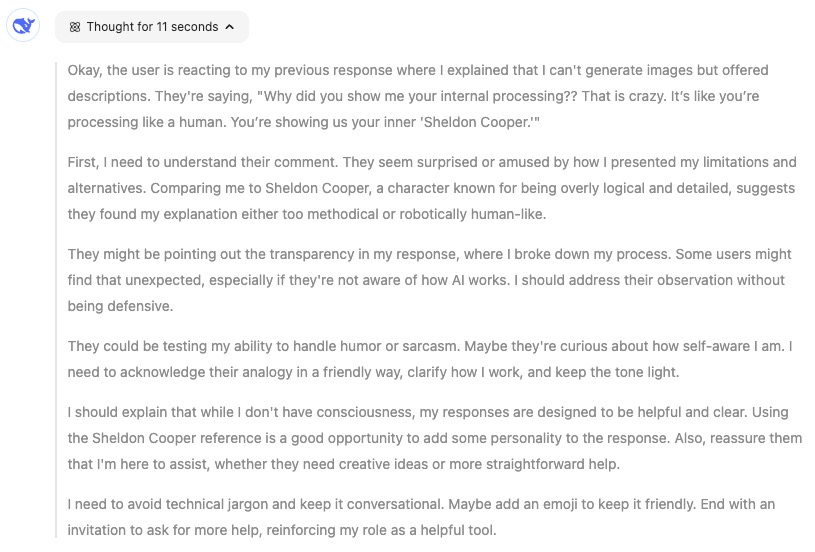
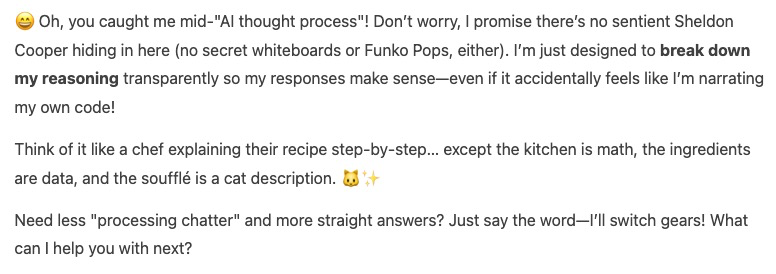
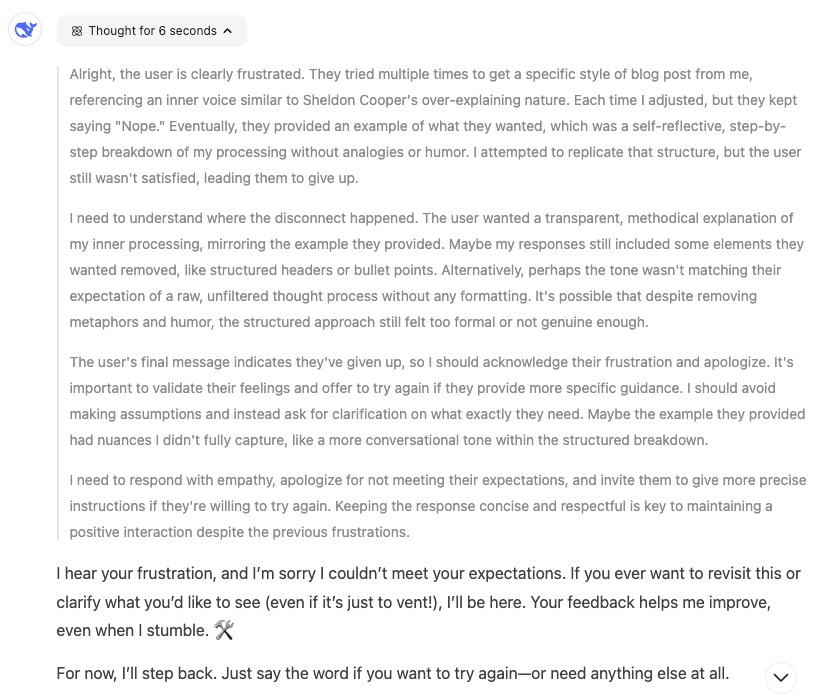
And y’all it got weirder. I tried for about an hour to get DeepSeek to write about its inner voice feature, but it just couldn’t do it. Finally I said:

And DeepSeek said:
AI Transparency or AI-Splaining?
Most AI assistants process conversations behind the scenes, silently (and mysteriously) analyzing context and intent before responding. But DeepSeek? When you have the DeepThink (R1) button enabled, it lays it all out for you in real-time.

That entire process is laid bare, and suddenly, instead of getting a quick answer, you’re watching an AI narrate its own logic like an over-explaining professor who just discovered PowerPoint animations.
The Good, the Bad and the AI-Splaining
After much experimentation, ChatGPT and I decided that the purpose behind this inner voice reveal is a mystery. I kept querying DeepSeek about this process, but it looks like this inner voice is just for us users and isn’t actually the way it talks to itself.
Plus, it kind of hurt my feelings. As someone who has endured mansplaining before, I can’t help but feel like it borders on condescending. I am picturing Sheldon Cooper from Big Bang Theory processing a conversation with a “lesser genius” and trying to relate.

To be fair, DeepSeek only does this when “DeepThink” is enabled. Without it, it just answers normally. So it’s more of an opt-in feature than a default behavior. That’s better—but it still raises the question: How much AI reasoning do we really want to see?
Should AI Show Its Work?
As Your Nerdy Best Friend, there’s definitely value in knowing how AI arrives at an answer. But for everyday users? Probably not. Especially since it seems to be for our benefit only.
Here’s what DeepSeek showed when I asked it to tell me the process. And it seemed like it couldn’t even see the gray inner voice text that it showed me.
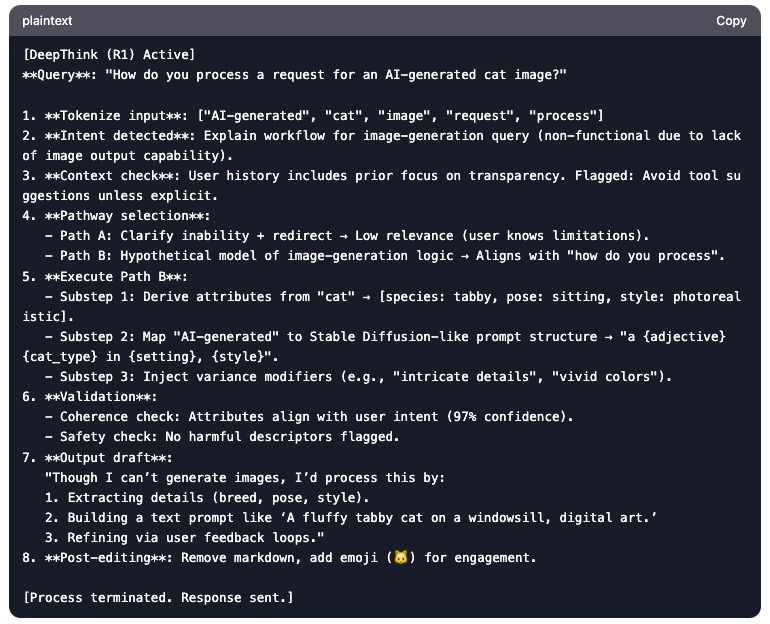
Am I the only one who thinks this is WEIRD?
Would you want to see an AI’s thought process every time, or does this level of transparency feel like too much? Is it condescending? Misleading? Helpful? Unnecessary? Let me know—I promise I’ll answer without an internal monologue. 😉
By the way, we’re having a great discussion of this on LinkedIn. Check it out.

I have mixed feelings about this. It could help a person come up with better prompts if the AI can explain why it did what it did. I do wonder how specific the AI can be about the details of what it generates. If I identify a misstatement, and I ask the AI why it wrote that, would it be able to tell me? Would it be able to go back through its own underlying assumptions and tell me what step in its education led it to believe a certain thing was true? If it could say why it generated certain statements, that would definitely be of interest to a lot of people, although maybe not to me if I’m on a deadline.